
 Image 1 of 1
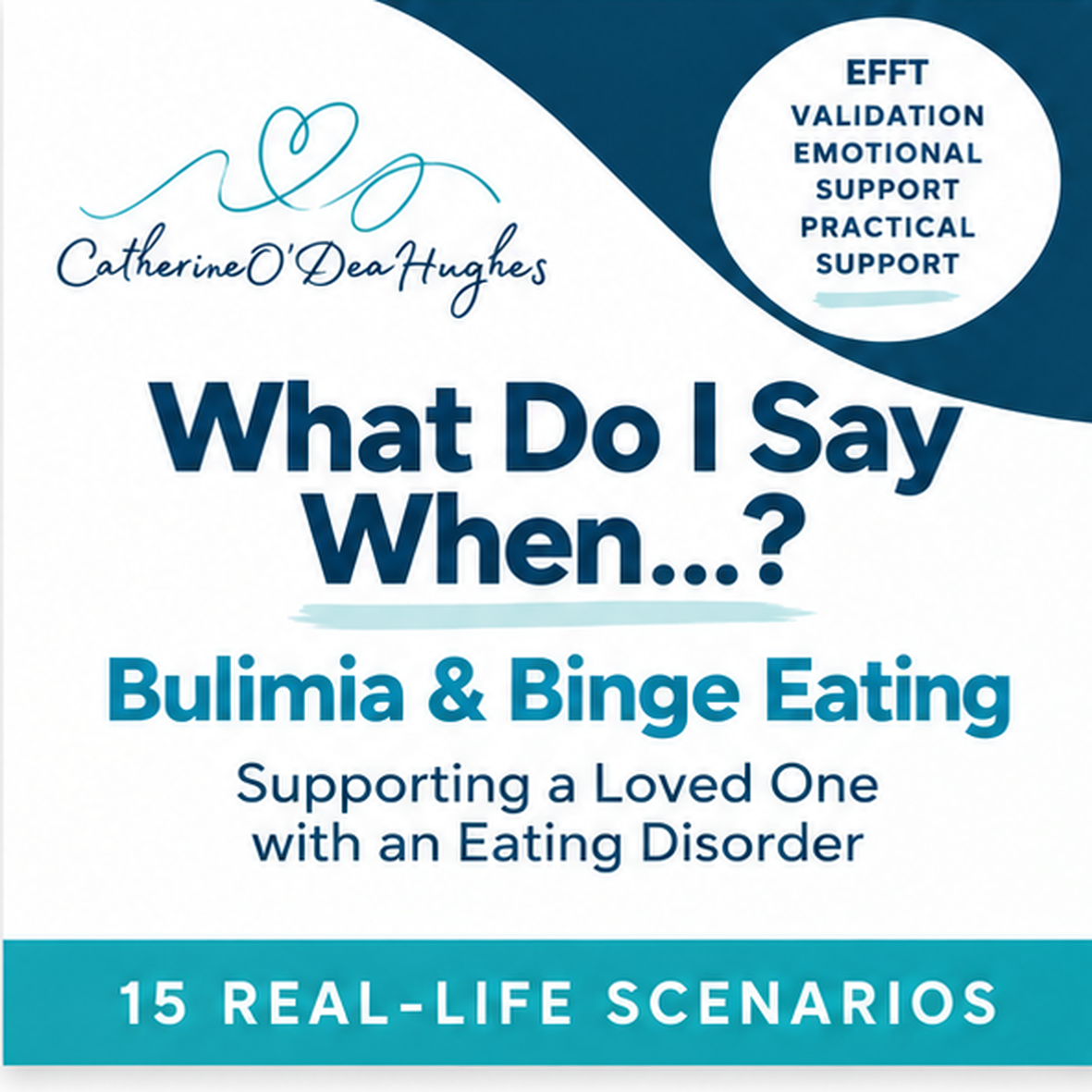
What Do I Say When…? — Bulimia & Binge Eating (15 Scenarios)
When your loved one is struggling with bingeing, purging or overwhelming feelings of shame, how do you respond in a way that actually helps?
You want to support them, and you might find yourself unsure what to say, worried about making things worse or struggling to understand behaviours that can feel frightening, confusing or difficult to talk about.
Perhaps you've noticed your loved one hiding food, avoiding meals, exercising to compensate for eating or withdrawing after a binge.
You want to understand what's happening, offer reassurance and encouragement, and help them feel supported without increasing their shame or getting drawn into conflict.
This practical guide brings together 15 real-life scenarios relating to bulimia and binge eating, with examples inspired by Emotion-Focused Family Therapy (EFFT) and the New Maudsley Approach.
Rather than simply telling you to validate feelings or offer support, it shows you what these approaches can sound like in everyday conversations.
You'll explore different ways to acknowledge difficult emotions, understand what might be happening beneath your loved one's behaviours, and offer emotional and practical support while maintaining connection.
Inside this guide — all 15 scenarios
Not sure whether this is the right guide for you? Have a look through the situations covered below to see whether they reflect some of the challenges you're navigating at home.
Denying there's a problem
Feeling ashamed after a binge
Compensating with excessive exercise
Avoiding meals to compensate for a binge
Nighttime binges
Stealing food from family members
Fear of weight gain after a binge
Avoiding social events due to bingeing
Overwhelmed by guilt and shame after purging
Hiding bingeing behaviours from family
Relapsing after a period of progress
Struggling with emotional eating
Anxiety about eating trigger foods
Feeling disconnected from the recovery process
Avoiding discussions about the eating disorder voice
What makes this guide different?
Each scenario uses a two-step approach inspired by Emotion-Focused Family Therapy (EFFT), helping you understand how to respond to distress with validation and meaningful support.
Step 1 — Validate
For those moments when your loved one is experiencing shame, guilt, fear or overwhelming emotions.
Using EFFT's three becauses approach, you'll explore ways to acknowledge what they're feeling and why those feelings might make sense from their perspective.
Validation doesn't mean agreeing with eating disorder thoughts or behaviours. It means helping your loved one feel heard and understood, even when you're concerned about what's happening.
Step 2 — Support
Once you've acknowledged their feelings, you can explore what kind of support might be most helpful.
Emotional Support
For moments when your loved one needs connection, understanding, encouragement or simply someone willing to stay alongside them through difficult feelings.
Practical Support
For moments when they might benefit from help with a specific situation, a collaborative next step or support in navigating something they're finding difficult.
These aren't rigid steps you have to get right every time. The examples help you recognise different ways to respond, depending on what your loved one needs in that moment.
How this guide can help
Explore ways to:
Respond to bingeing, purging and related distress with greater empathy and understanding.
Recognise the shame, fear and difficult emotions that may be contributing to eating disorder behaviours.
Validate feelings without reinforcing eating disorder beliefs or behaviours.
Offer emotional support without rushing to fix, reassure or find solutions.
Explore practical ways of supporting your loved one without taking over their recovery.
Stay connected when your loved one withdraws, becomes defensive or finds it difficult to talk.
Build confidence in approaching conversations that might otherwise feel overwhelming.
You don't have to get every conversation right.
These aren't scripts to memorise or another set of things you're supposed to do perfectly.
Think of them as communication companions. Something you can read, return to and adapt to your own family and circumstances.
The more familiar these approaches become, the easier it can be to draw on them when emotions are running high.
Knowing the tools is one thing. Finding the words in the middle of a difficult conversation is another.
That's exactly what these guides are here to help with.
What's included
15 real-life scenarios relating to bulimia and binge eating
EFFT-inspired validation examples using the three becauses
Emotional and practical support examples for each scenario
Guidance on responding to different challenges and stages of change
A clickable scenario index for finding the situation you need
20-page downloadable PDF
This educational resource is designed to complement professional eating disorder care, not replace individual medical, psychological, therapeutic or dietary advice.
Important: Bingeing, purging, compensatory behaviours and associated distress can involve serious medical and psychological risks. If you're concerned about your loved one's health or safety, seek appropriate professional support. Communication techniques are not a substitute for medical assessment or treatment.
When your loved one is struggling with bingeing, purging or overwhelming feelings of shame, how do you respond in a way that actually helps?
You want to support them, and you might find yourself unsure what to say, worried about making things worse or struggling to understand behaviours that can feel frightening, confusing or difficult to talk about.
Perhaps you've noticed your loved one hiding food, avoiding meals, exercising to compensate for eating or withdrawing after a binge.
You want to understand what's happening, offer reassurance and encouragement, and help them feel supported without increasing their shame or getting drawn into conflict.
This practical guide brings together 15 real-life scenarios relating to bulimia and binge eating, with examples inspired by Emotion-Focused Family Therapy (EFFT) and the New Maudsley Approach.
Rather than simply telling you to validate feelings or offer support, it shows you what these approaches can sound like in everyday conversations.
You'll explore different ways to acknowledge difficult emotions, understand what might be happening beneath your loved one's behaviours, and offer emotional and practical support while maintaining connection.
Inside this guide — all 15 scenarios
Not sure whether this is the right guide for you? Have a look through the situations covered below to see whether they reflect some of the challenges you're navigating at home.
Denying there's a problem
Feeling ashamed after a binge
Compensating with excessive exercise
Avoiding meals to compensate for a binge
Nighttime binges
Stealing food from family members
Fear of weight gain after a binge
Avoiding social events due to bingeing
Overwhelmed by guilt and shame after purging
Hiding bingeing behaviours from family
Relapsing after a period of progress
Struggling with emotional eating
Anxiety about eating trigger foods
Feeling disconnected from the recovery process
Avoiding discussions about the eating disorder voice
What makes this guide different?
Each scenario uses a two-step approach inspired by Emotion-Focused Family Therapy (EFFT), helping you understand how to respond to distress with validation and meaningful support.
Step 1 — Validate
For those moments when your loved one is experiencing shame, guilt, fear or overwhelming emotions.
Using EFFT's three becauses approach, you'll explore ways to acknowledge what they're feeling and why those feelings might make sense from their perspective.
Validation doesn't mean agreeing with eating disorder thoughts or behaviours. It means helping your loved one feel heard and understood, even when you're concerned about what's happening.
Step 2 — Support
Once you've acknowledged their feelings, you can explore what kind of support might be most helpful.
Emotional Support
For moments when your loved one needs connection, understanding, encouragement or simply someone willing to stay alongside them through difficult feelings.
Practical Support
For moments when they might benefit from help with a specific situation, a collaborative next step or support in navigating something they're finding difficult.
These aren't rigid steps you have to get right every time. The examples help you recognise different ways to respond, depending on what your loved one needs in that moment.
How this guide can help
Explore ways to:
Respond to bingeing, purging and related distress with greater empathy and understanding.
Recognise the shame, fear and difficult emotions that may be contributing to eating disorder behaviours.
Validate feelings without reinforcing eating disorder beliefs or behaviours.
Offer emotional support without rushing to fix, reassure or find solutions.
Explore practical ways of supporting your loved one without taking over their recovery.
Stay connected when your loved one withdraws, becomes defensive or finds it difficult to talk.
Build confidence in approaching conversations that might otherwise feel overwhelming.
You don't have to get every conversation right.
These aren't scripts to memorise or another set of things you're supposed to do perfectly.
Think of them as communication companions. Something you can read, return to and adapt to your own family and circumstances.
The more familiar these approaches become, the easier it can be to draw on them when emotions are running high.
Knowing the tools is one thing. Finding the words in the middle of a difficult conversation is another.
That's exactly what these guides are here to help with.
What's included
15 real-life scenarios relating to bulimia and binge eating
EFFT-inspired validation examples using the three becauses
Emotional and practical support examples for each scenario
Guidance on responding to different challenges and stages of change
A clickable scenario index for finding the situation you need
20-page downloadable PDF
This educational resource is designed to complement professional eating disorder care, not replace individual medical, psychological, therapeutic or dietary advice.
Important: Bingeing, purging, compensatory behaviours and associated distress can involve serious medical and psychological risks. If you're concerned about your loved one's health or safety, seek appropriate professional support. Communication techniques are not a substitute for medical assessment or treatment.