 Image 1 of 1
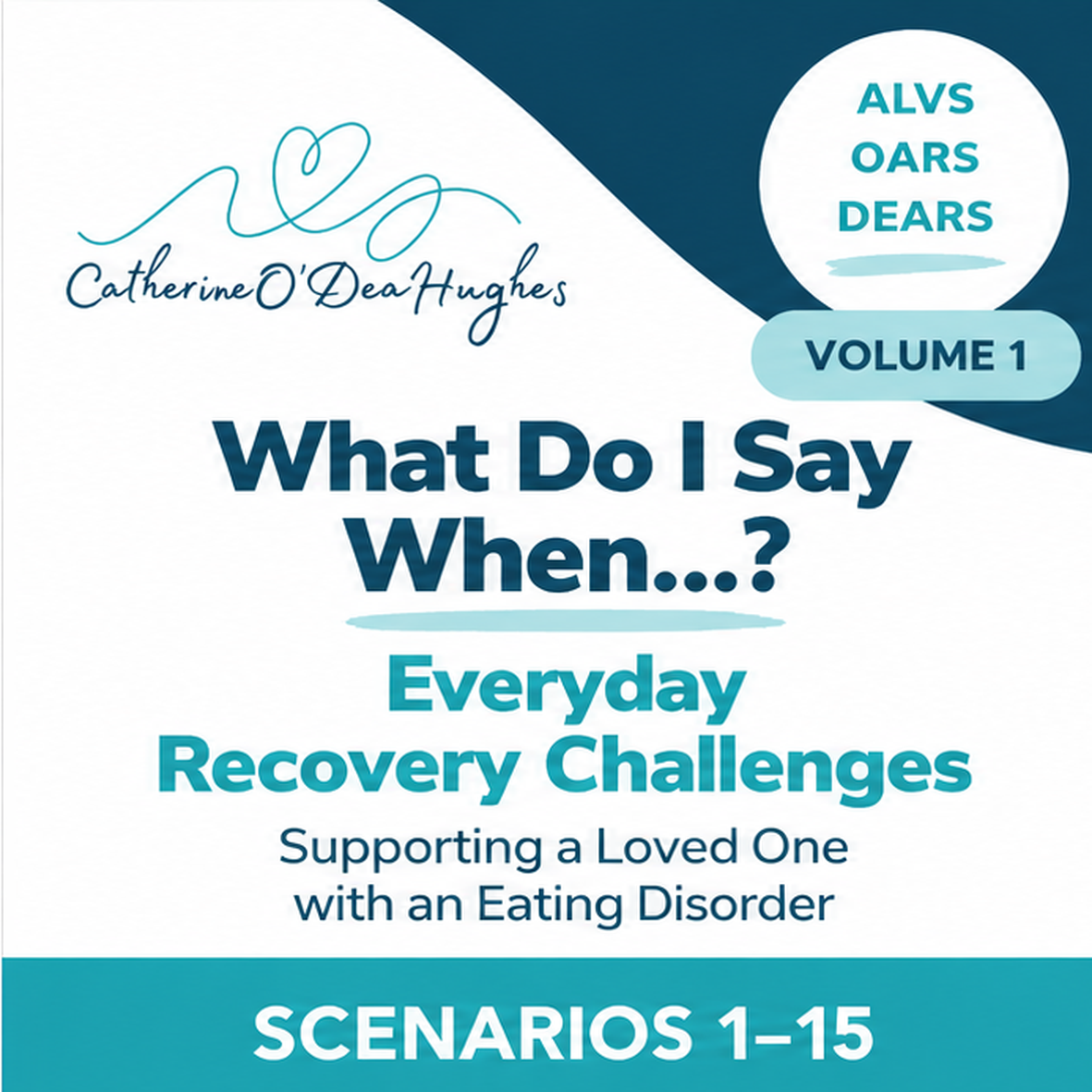
What Do I Say When…? — Everyday Recovery Challenges (Scenarios 1–15)
When your loved one is anxious about food, refusing to join a family meal or struggling with recovery, how do you respond in a way that actually helps?
You want to say something supportive. You might have learnt about validation, listening and motivational communication, and still find yourself struggling to find the words when emotions are running high.
Perhaps you're worried about saying the wrong thing, making their anxiety worse or getting drawn into another difficult conversation.
This practical guide brings together 15 real-life eating disorder scenarios, with examples of how to use three communication tools taught within the New Maudsley Approach: ALVS, OARS and DEARS.
Rather than simply telling you to validate, listen or encourage change, it shows you what these approaches can sound like in everyday conversations.
You'll explore different ways to acknowledge distress, understand what might be happening beneath your loved one's reactions, and support recovery while maintaining connection.
Inside this guide - all 15 scenarios
Not sure whether this is the right guide for you? Have a look through the situations covered below to see whether they reflect some of the challenges you're navigating at home.
Anxiety about trying a fear food
Comparing themselves to others at a meal
Feeling defeated after a slip-up
Struggling to attend a family meal
Anger at a caregiver for setting limits
Processing criticism about the recovery progress
Avoiding meal times
Nervous about a therapy session
Avoiding social events
Refusing to try a fear food
Expressing shame about weight changes
Refusing to attend a doctor's appointment
Fear of being judged when eating in public
Feeling overwhelmed by recovery goals
Denying hunger cues
What makes this guide different?
Each scenario explores three communication approaches, helping you understand which tool might be most helpful in different situations.
ALVS - Attend, Label, Validate, Soothe
For those moments when your loved one is distressed, overwhelmed or struggling with difficult emotions. Learn ways to acknowledge what they're experiencing and help bring the emotional temperature down.
OARS - Open Questions, Affirmations, Reflections, Summaries
For conversations where you want to understand what's happening, encourage your loved one to share their thoughts and help them feel heard without jumping straight into advice or solutions.
DEARS - Develop Discrepancy, Express Empathy, Amplify Ambivalence, Roll with Resistance, Support Self-Efficacy
For those moments when your loved one feels stuck, resistant or torn between wanting recovery and fearing change. Explore ways to encourage reflection, recognise their strengths and support their own motivation for change.
These are three separate tools, not a sequence you have to follow. The examples help you recognise when each approach might be useful.
How this guide can help
Explore ways to:
Respond to distress with greater understanding and confidence.
Validate difficult feelings without reinforcing eating disorder behaviours.
Ask questions that encourage conversation rather than defensiveness.
Recognise and affirm your loved one's efforts and strengths.
Navigate resistance while maintaining important recovery boundaries.
Practise different responses so the tools become easier to use in real life.
You don't have to get every conversation right.
These aren't scripts to memorise or another set of things you're supposed to do perfectly.
Think of them as communication companions. Something you can read, return to and adapt to your own family and circumstances.
The more familiar these approaches become, the easier it can be to draw on them when emotions are running high.
Knowing the tools is one thing. Finding the words in the middle of a difficult conversation is another.
That's exactly what these guides are here to help with.
What's included
15 real-life eating disorder scenarios
Practical examples using ALVS, OARS and DEARS
Guidance on choosing the most appropriate communication tool
A clickable scenario index for finding the situation you need
30-page downloadable PDF
This educational resource is designed to complement professional eating disorder care, not replace individual medical, psychological, therapeutic or dietary advice.
When your loved one is anxious about food, refusing to join a family meal or struggling with recovery, how do you respond in a way that actually helps?
You want to say something supportive. You might have learnt about validation, listening and motivational communication, and still find yourself struggling to find the words when emotions are running high.
Perhaps you're worried about saying the wrong thing, making their anxiety worse or getting drawn into another difficult conversation.
This practical guide brings together 15 real-life eating disorder scenarios, with examples of how to use three communication tools taught within the New Maudsley Approach: ALVS, OARS and DEARS.
Rather than simply telling you to validate, listen or encourage change, it shows you what these approaches can sound like in everyday conversations.
You'll explore different ways to acknowledge distress, understand what might be happening beneath your loved one's reactions, and support recovery while maintaining connection.
Inside this guide - all 15 scenarios
Not sure whether this is the right guide for you? Have a look through the situations covered below to see whether they reflect some of the challenges you're navigating at home.
Anxiety about trying a fear food
Comparing themselves to others at a meal
Feeling defeated after a slip-up
Struggling to attend a family meal
Anger at a caregiver for setting limits
Processing criticism about the recovery progress
Avoiding meal times
Nervous about a therapy session
Avoiding social events
Refusing to try a fear food
Expressing shame about weight changes
Refusing to attend a doctor's appointment
Fear of being judged when eating in public
Feeling overwhelmed by recovery goals
Denying hunger cues
What makes this guide different?
Each scenario explores three communication approaches, helping you understand which tool might be most helpful in different situations.
ALVS - Attend, Label, Validate, Soothe
For those moments when your loved one is distressed, overwhelmed or struggling with difficult emotions. Learn ways to acknowledge what they're experiencing and help bring the emotional temperature down.
OARS - Open Questions, Affirmations, Reflections, Summaries
For conversations where you want to understand what's happening, encourage your loved one to share their thoughts and help them feel heard without jumping straight into advice or solutions.
DEARS - Develop Discrepancy, Express Empathy, Amplify Ambivalence, Roll with Resistance, Support Self-Efficacy
For those moments when your loved one feels stuck, resistant or torn between wanting recovery and fearing change. Explore ways to encourage reflection, recognise their strengths and support their own motivation for change.
These are three separate tools, not a sequence you have to follow. The examples help you recognise when each approach might be useful.
How this guide can help
Explore ways to:
Respond to distress with greater understanding and confidence.
Validate difficult feelings without reinforcing eating disorder behaviours.
Ask questions that encourage conversation rather than defensiveness.
Recognise and affirm your loved one's efforts and strengths.
Navigate resistance while maintaining important recovery boundaries.
Practise different responses so the tools become easier to use in real life.
You don't have to get every conversation right.
These aren't scripts to memorise or another set of things you're supposed to do perfectly.
Think of them as communication companions. Something you can read, return to and adapt to your own family and circumstances.
The more familiar these approaches become, the easier it can be to draw on them when emotions are running high.
Knowing the tools is one thing. Finding the words in the middle of a difficult conversation is another.
That's exactly what these guides are here to help with.
What's included
15 real-life eating disorder scenarios
Practical examples using ALVS, OARS and DEARS
Guidance on choosing the most appropriate communication tool
A clickable scenario index for finding the situation you need
30-page downloadable PDF
This educational resource is designed to complement professional eating disorder care, not replace individual medical, psychological, therapeutic or dietary advice.