 Image 1 of 1
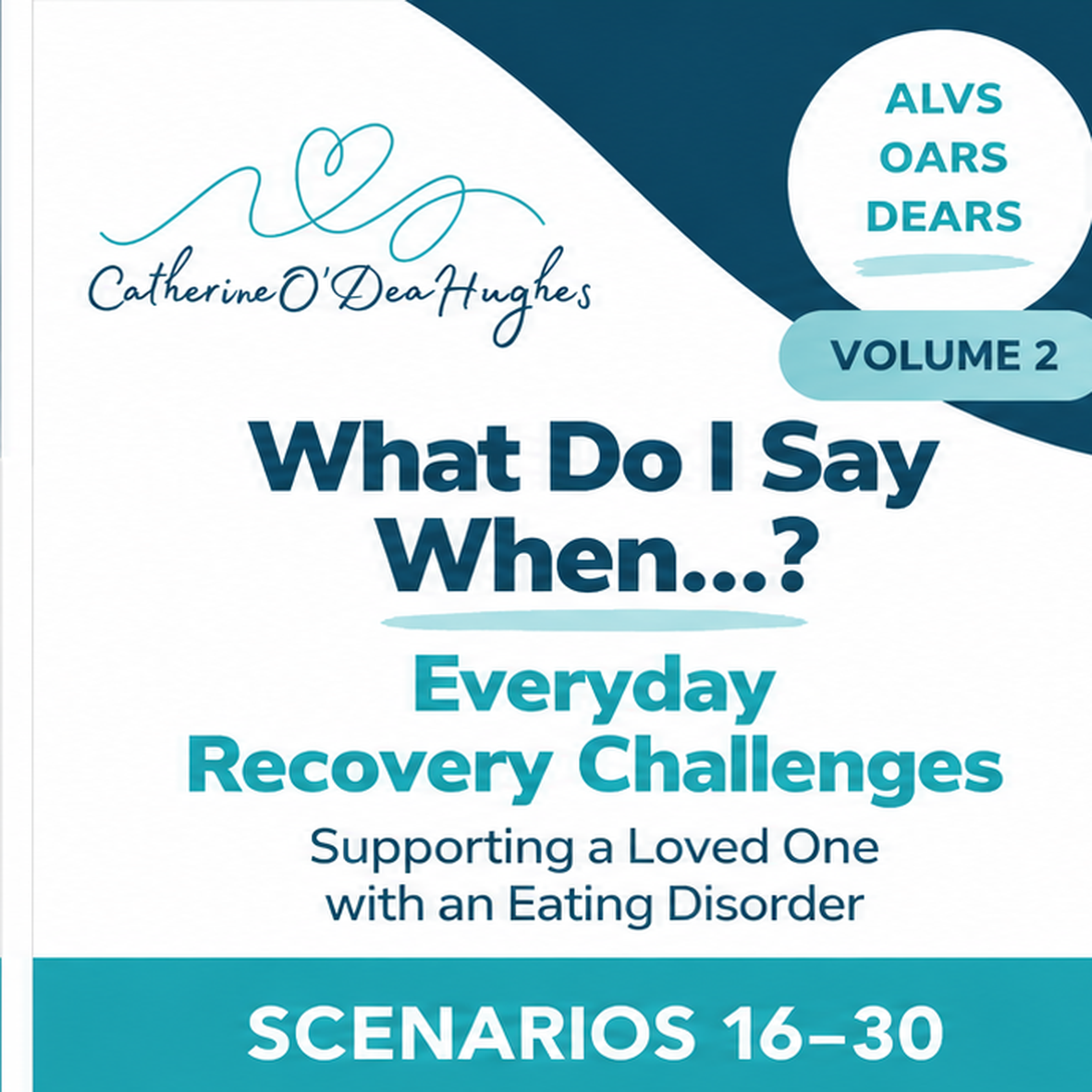
What Do I Say When…? — Everyday Recovery Challenges (Scenarios 16–30)
What do you say when your loved one tells you recovery feels hopeless, they're frightened of gaining weight, or they just don't want to talk anymore?
Some of the hardest conversations aren't necessarily about what's on the plate.
They're about the fear, exhaustion, shame, frustration and conflicting feelings that can come with living with an eating disorder.
You might see your loved one withdrawing from friends, struggling with their body, becoming increasingly caught up in eating disorder rules or questioning whether recovery is worth it.
You want to understand what they're going through, offer encouragement and help them keep moving towards recovery, without every conversation becoming another source of pressure.
This practical guide brings together 15 further real-life eating disorder scenarios, with examples of how to use three communication tools taught within the New Maudsley Approach: ALVS, OARS and DEARS.
Rather than simply telling you to validate, listen or encourage change, it shows you what these approaches can sound like in some of the more emotionally challenging conversations.
You'll explore ways to recognise what might be happening beneath your loved one's reactions, navigate resistance and mixed feelings about recovery, and help them reconnect with their own strengths and reasons for change.
Inside this guide — all 15 scenarios
Not sure whether this is the right guide for you? Have a look through the situations covered below to see whether they reflect some of the challenges you're navigating at home.
Expressing hopelessness about recovery
Anger at a friend or sibling over food-related conflict
Fear of being a burden to the family
When connecting with their body feels frightening
Fear of gaining weight
Refusing to talk about emotions
Fixating on exercise or movement
When they're being cruel to themselves: self-criticism or name-calling ("I'm disgusting," "I'm worthless")
Withdrawing from friends and hobbies
Feeling trapped in the recovery process
Lying about eating or food intake
Comparing self to others ("they're thinner than me")
When they feel compelled to count, weigh or track food
When they're afraid a particular food will cause weight gain ("if I eat that, I'll gain weight")
When they want recovery and fear letting go of the eating disorder
What makes this guide different?
Each scenario explores three communication approaches, helping you understand which tool might be most helpful in different situations.
ALVS — Attend, Label, Validate, Soothe
For those moments when your loved one is distressed, overwhelmed or struggling with difficult emotions. Learn ways to acknowledge what they're experiencing and help bring the emotional temperature down.
OARS — Open Questions, Affirmations, Reflections, Summaries
For conversations where you want to understand what's happening, encourage your loved one to share their thoughts and help them feel heard without jumping straight into advice or solutions.
DEARS — Develop Discrepancy, Express Empathy, Amplify Ambivalence, Roll with Resistance, Support Self-Efficacy
For those moments when your loved one feels stuck, resistant or torn between wanting recovery and fearing change. Explore ways to encourage reflection, recognise their strengths and support their own motivation for change.
These are three separate tools, not a sequence you have to follow. The examples help you recognise when each approach might be useful.
How this guide can help
Explore ways to:
Respond to hopelessness and difficult emotions with greater empathy and understanding.
Stay connected when your loved one withdraws, becomes angry or doesn't want to talk.
Recognise the fears and conflicting feelings that can make recovery so difficult.
Validate distress without reinforcing eating disorder beliefs or behaviours.
Gently explore the impact of eating disorder behaviours without blame or confrontation.
Help your loved one reconnect with what matters to them beyond the eating disorder.
Recognise and affirm their efforts, strengths and capacity for change.
Build confidence in navigating conversations that feel particularly emotional or challenging.
You don't have to get every conversation right.
These aren't scripts to memorise or another set of things you're supposed to do perfectly.
Think of them as communication companions. Something you can read, return to and adapt to your own family and circumstances.
The more familiar these approaches become, the easier it can be to draw on them when emotions are running high.
Knowing the tools is one thing. Finding the words in the middle of a difficult conversation is another.
That's exactly what these guides are here to help with.
What's included
15 real-life eating disorder scenarios (16–30)
Practical examples using ALVS, OARS and DEARS
Guidance on choosing the most appropriate communication tool
A clickable scenario index for finding the situation you need
37-page downloadable PDF
This educational resource is designed to complement professional eating disorder care, not replace individual medical, psychological, therapeutic or dietary advice.
Important: Expressions of hopelessness, self-harm or suicidal thoughts must always be taken seriously. If you are concerned about your loved one's immediate safety, seek urgent professional support. Communication techniques are not a substitute for appropriate medical or mental health assessment.